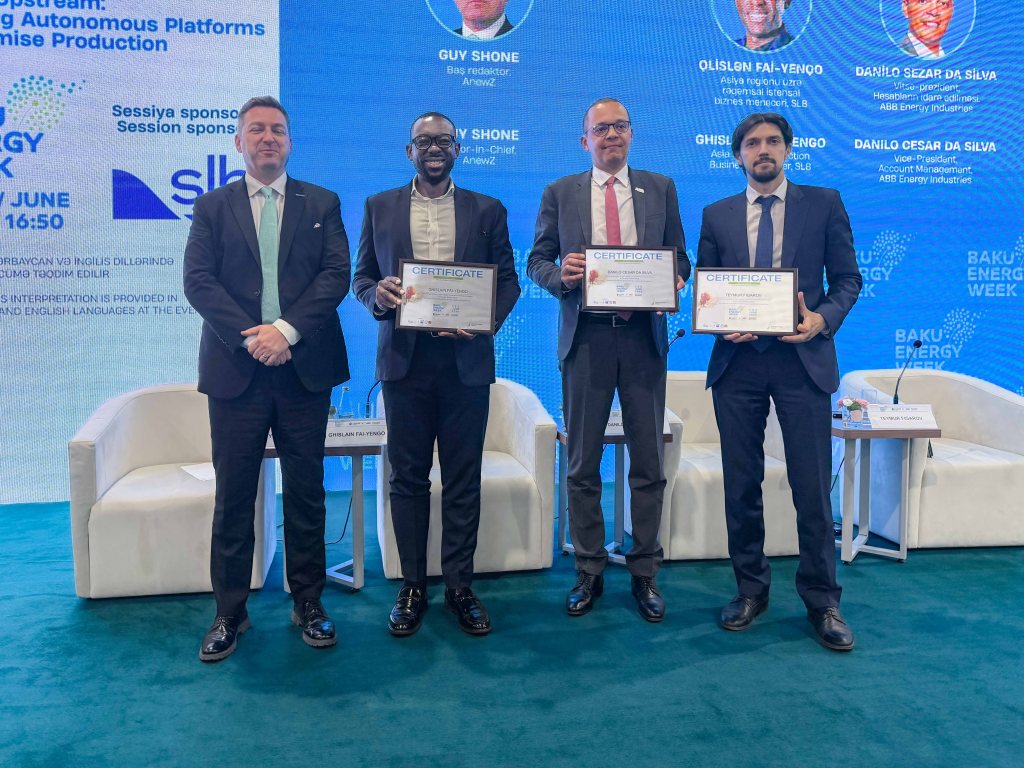
The 31st Baku Energy Forum wrapped last month, and the discussions showed not a distant vision of offshore autonomy, but a transition already underway across the industry.
Before Baku, I spoke with operators across Malaysia, China, Australia, India, and Indonesia. The geography changed, but the questions remained the same: how do we reduce offshore capital costs, bring production forward, and make marginal assets economically viable? How do we reduce routine vessel interventions, optimise chemical and gas injections, and keep fewer people offshore exposed? These are not abstract ambitions but value opportunities that embedding and scaling autonomous operations can address today.
After 20 years of operating digital oilfields, we now have the tools to make the leap. Three things make it possible: augmented hardware: wellheads, pumps, and valves designed for digital operations that can sense, actuate, and self-regulate. We have AI-enabled enterprise platforms that contextualize data across all operations, run digital twins continuously, and push optimized setpoints back to controllers. And lastly, the change management and services layer that identifies opportunities, builds the business case, and secures the organizational and regulatory buy-in needed to scale.
Unmanned platforms are where this becomes undeniable: smaller footprints, less steel, jackup-installed, with offshore visits reduced to once a quarter, where regulations allow. Diverse teams are now based in onshore operations support centres, focused entirely on finding and acting on production opportunities. In these systems, production increases by 15% and gas injection drops by 20%, with every well a candidate, from mature assets to greenfields. Because unmanned platforms typically tie back to existing infrastructure for processing and treatment, capital requirements stay lean, making previously marginal projects attractive. Flow twins connected to smart pigs can advise operators when to pig flowlines, optimise chemical dosing to prevent hydrates, and monitor flowline integrity, with each function managed remotely.
This will not happen by chance; implementing one-offs will yield minimal value. To reap the value, we must scale deliberately: ensure our assets are digitally enabled, measure where we are today in terms of workflows and degree of autonomy and set honest goals across realistic time horizons. Today, software tracks the value that autonomous workflows deliver in real time. Bringing partners in early, before concepts are locked, is critical, as is taking time to understand our organisational culture. Cybersecurity in OT systems is a risk we cannot underestimate. Investing in the human transition from operators to system supervisors matters more than most organisations anticipate, and that shift requires real support, not just a new job title.
Remote operations centres are the operating model now, not a pilot, not a trend. The only question left is who has the conviction to turn that into a real competitive edge.